Lighting - Illuminating the Secrets to a Perfect Grow
Welcome to our guide on lighting fixtures for hydroponics. Understanding the various lighting systems available to you is crucial for a thriving garden, as it ensures your plants receive the correct amount of artificial sunlight in order to thrive. Let's dive into how artificial lighting works, how it affects plant growth, and why it's essential for your hydroponic system.
Types of Artificial Lighting
Artificial lighting was created in order to mimic the properties of natural light. We can acheive this by using various types of lighting systems which include:
Most commonly used for large-scale commercial growing operations, high-intensity discharge (HID) lights have an extremely high light output. They are also expensive and typically sold as large-scale installations versus small individual bulbs.
LED grow lights are energy-efficient, cost-effective, and provide an ideal light spectrum for all types of plants. Plus, they have a low heat output, so you won’t need to worry about burning your plants if you place the light too close.
Fluorescent grow lights are more energy-efficient than incandescent lights. However, they tend to be more expensive. They produce a decent light spectrum for plants and lower heat output than incandescent bulbs. However, they can be fragile and don’t last as long as some other lights available, such as LEDs. Fluorescent lights are usually sold as tube lights, which are generally not as convenient for simultaneously lighting just a few indoor plants.
Incandescent grow lights are the cheapest but also the least energy-efficient option available. They have a relatively low light output; however, their high heat output means they can’t be placed too close to any plants. Incandescent bulbs produce more red light than blue light.
Understanding the Electromagnetic Spectrum
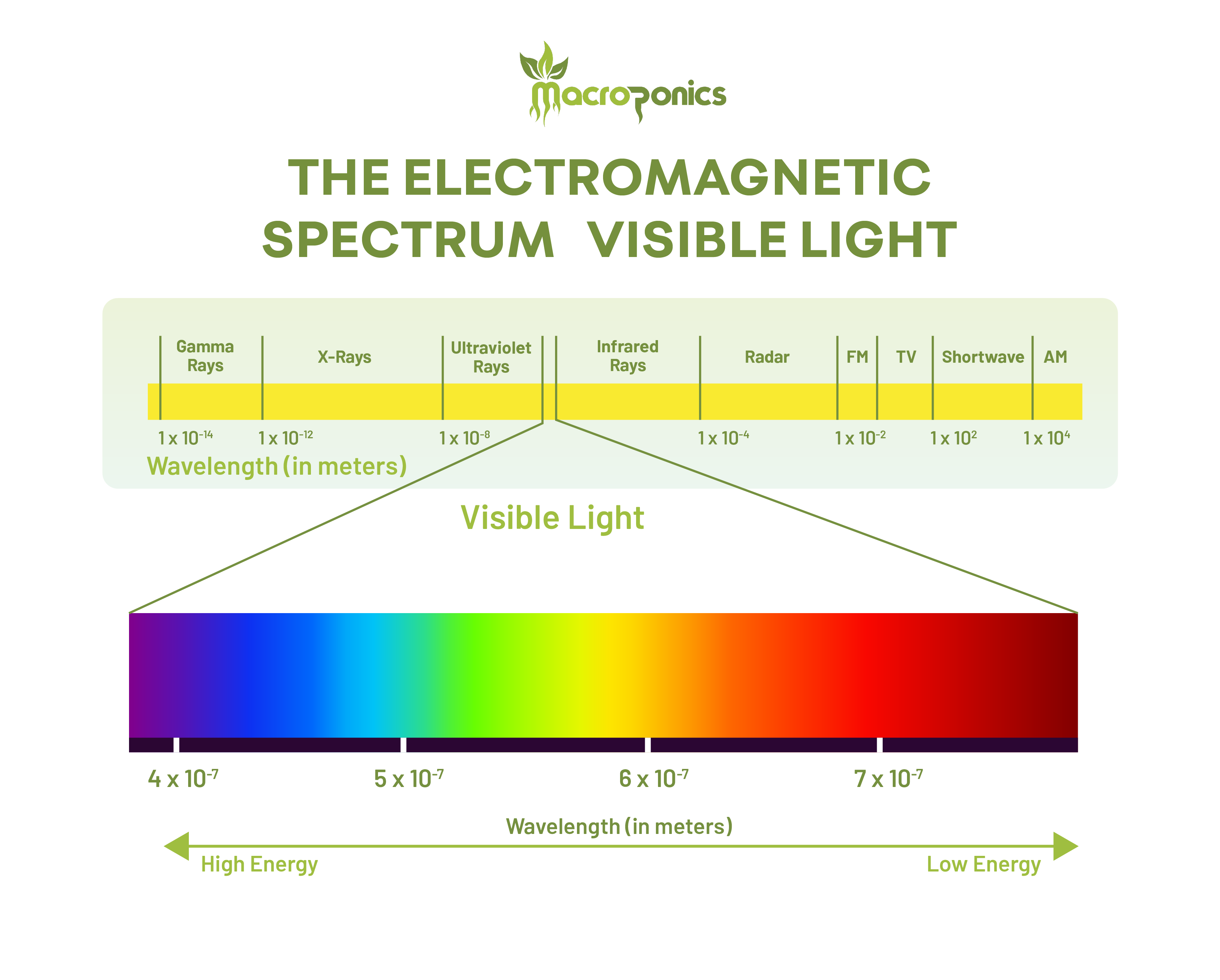
The Electromagnetic Spectrum is a method of measuring the wavelength of photons. Visible light makes up a very small subsection of the entire spectrum. The spectrum depicts the distance between each wave with shorter distance waves like gamma rays at the beginning of the chart and longer distance waves like AM radio waves at the end of the chart. Although some recent studies have suggested that some invisible wavelengths of light such as ultra-violet do affect plant growth, the majority of these studies suggest that this effect is negligible, for the purposes of this guide we will be focusing on the visible light spectrum.
Full Spectrum LED Lighting
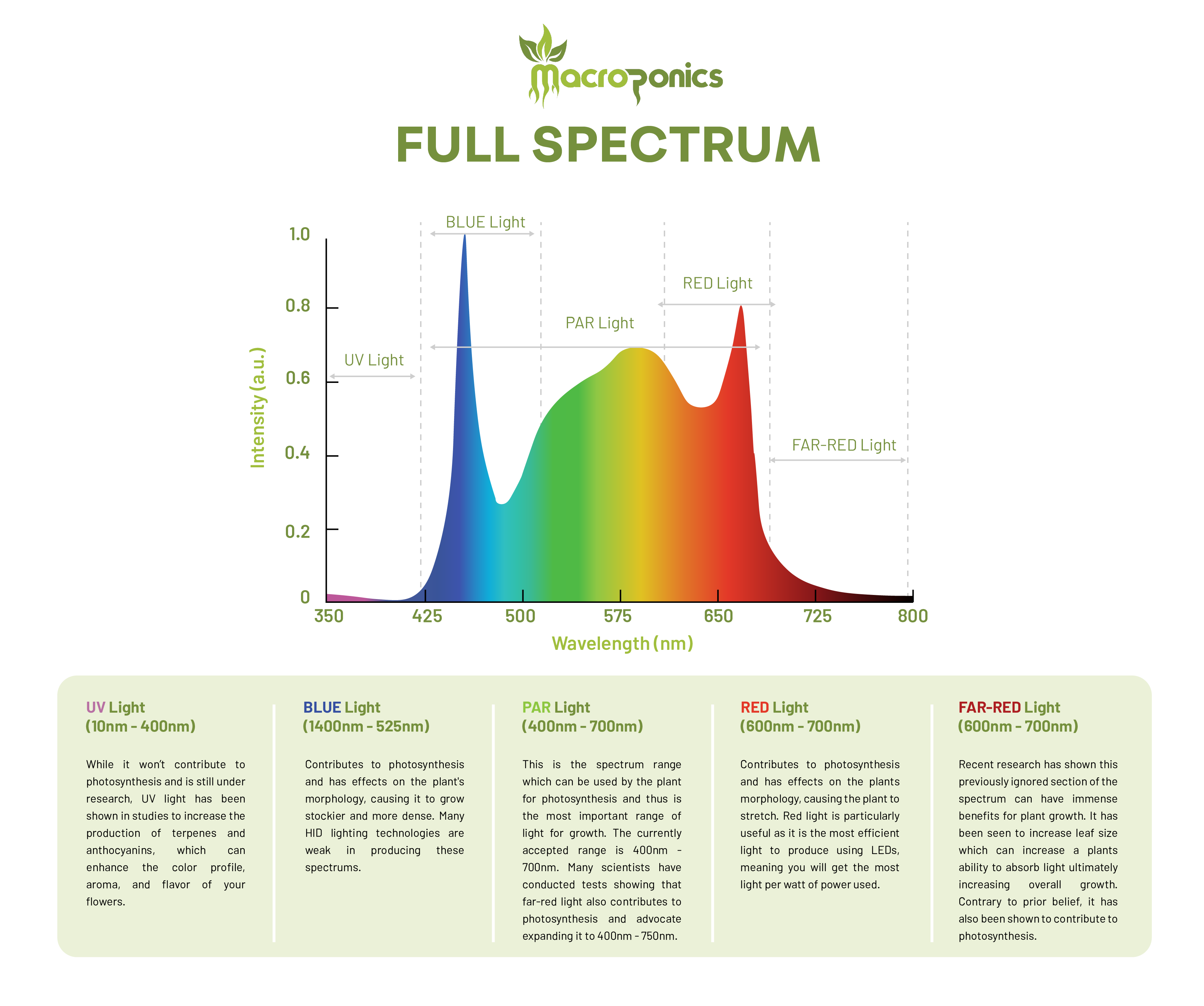
Many LED fixtures come with full spectrum LED's. What this means is that the LED's contained within the fixture emit photons from the entire visible light spectrum. This is great for growing larger plants that require higher intensity sunlight. Looking at the chart below you can see that the colors that are emitted with the highest intensity are red and blue. These are the colors that exhibit the greatest absorbtion by your plants.
Photon Absorbance
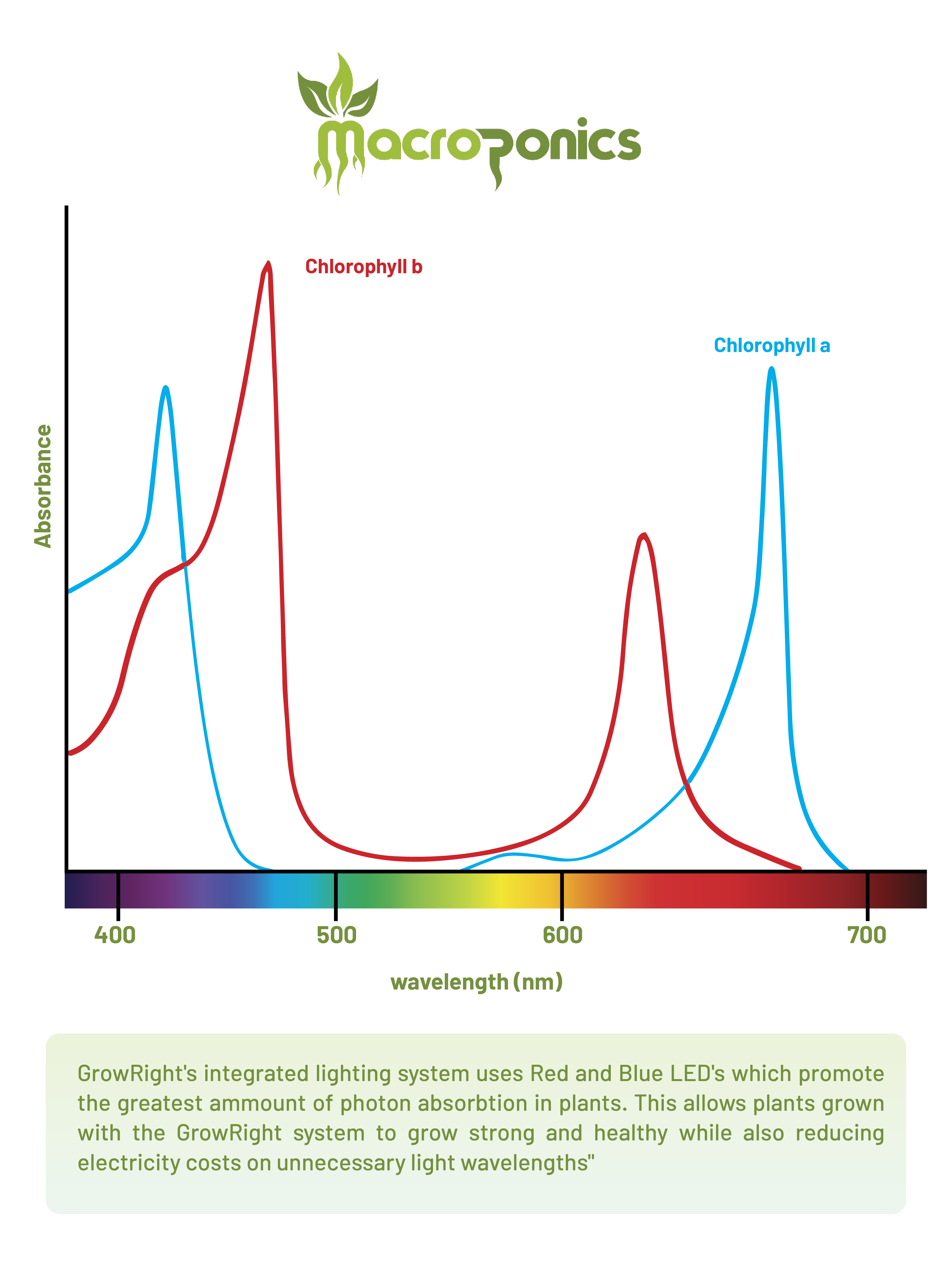
Looking at another chart below, we can see that chlorophyll-A and chlorophyll-B both exhibit the highest photon absorption rate at the color spectrum associated with the colors red and blue. This is why many LED fixtures opt to use only red and blue LED's in contrast to full spectrum LED's which incorporate other colors.
Why the GrowRight Tower Lighting system uses Red and Blue LED's
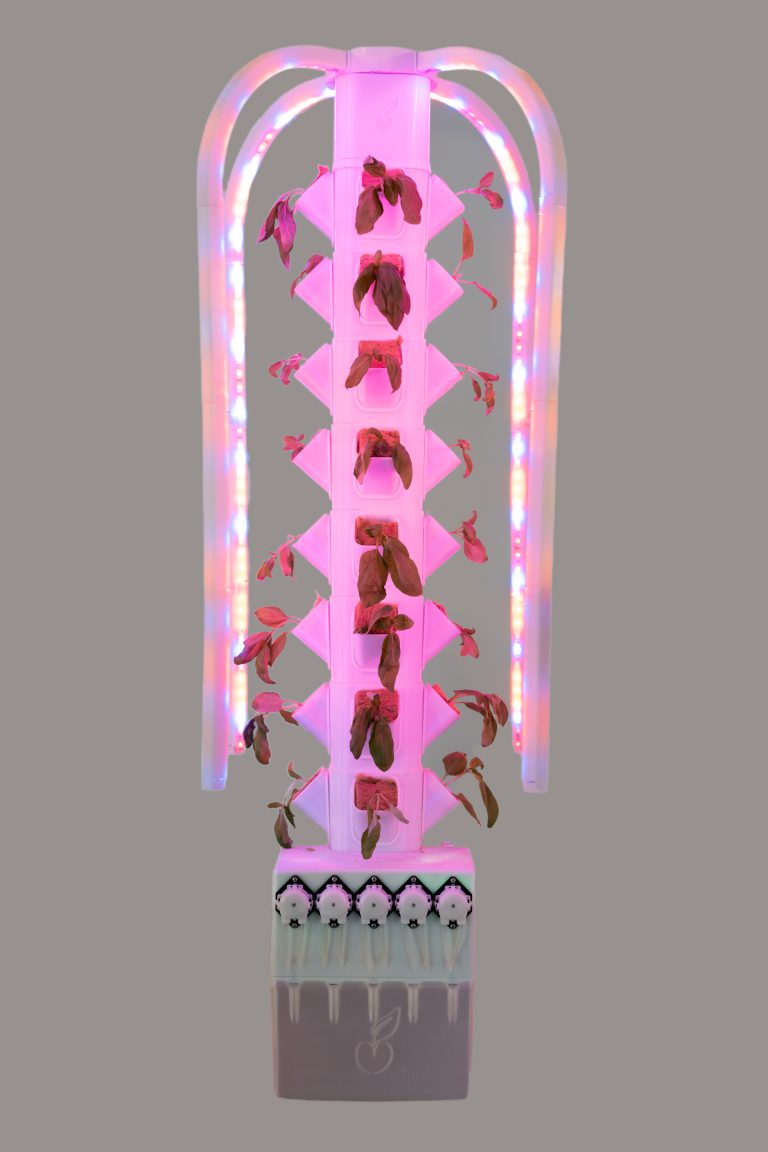
Most of the plants that would be grown using the GrowRight GrowTower setup would not require full spectrum lighting, hence Macroponics has opted to use the more energy efficient LED's that utilize the red and blue spectrum only. This allows the device to be much more energy efficient while also providing your plants with the light spectrums they need in order to thrive.